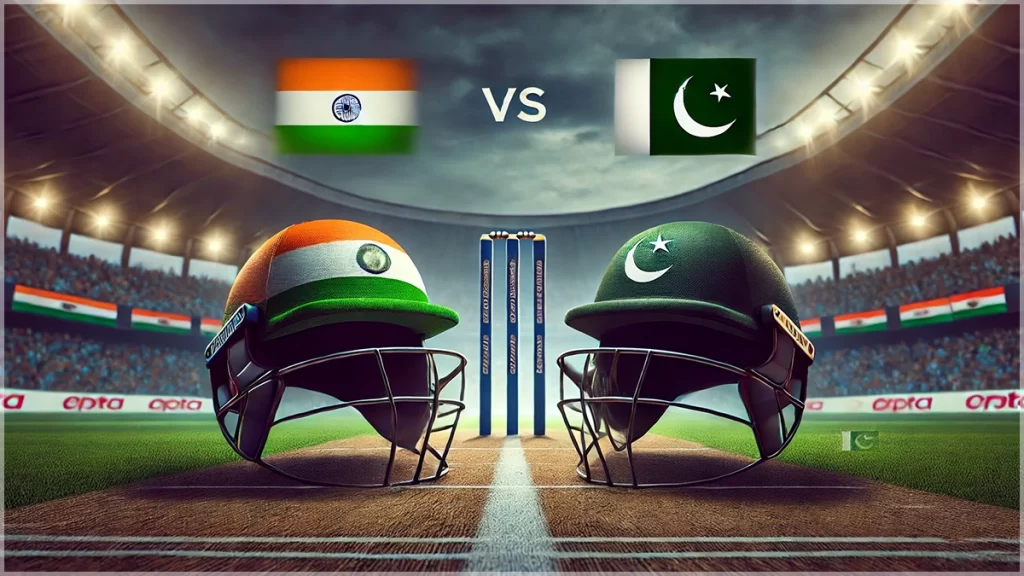
In February 2025, Pakistan is scheduled to host the ICC Champions Trophy. However, India has officially declined to send its cricket team to Pakistan for the tournament. This decision, citing security concerns, has created a stir in the international cricket world. The primary question on everyone’s mind is: Why did India refuse to send its cricket team to Pakistan for the 2025 Champions Trophy? Here, we explore the reasons behind India’s decision, the reaction from Pakistan, and the broader implications for cricket.
Table of Contents
Why India Boldly Refused to Send Its Cricket Team to Pakistan
‘Why India boldly refused to send its cricket team to Pakistan’, has become a central topic in the cricketing world. India’s concerns are primarily related to safety, as previous security issues have made Pakistan a high-risk destination for sports events.
- Security Concerns Based on Past Incidents in Pakistan
One of the main reasons why India boldly refused to send its cricket team to Pakistan is the history of security incidents that have taken place there. The 2009 attack on the Sri Lankan cricket team is still fresh in the minds of cricket boards worldwide. That incident led to a decade-long isolation for Pakistan from hosting international cricket matches, with Pakistan forced to hold its ‘home’ games in the UAE. - Current Security Threats in Pakistan
Recent events in Pakistan have raised further safety concerns. In 2024 alone, numerous terror attacks occurred in major Pakistani cities, intensifying worries over player safety. For example, a November 2024 attack in Quetta resulted in the tragic deaths of 26 civilians. Such events make it challenging for teams to consider Pakistan a safe venue, influencing India’s decision to skip the tournament. - Safety of Indian Players
With strained political relations and past hostilities, India is particularly cautious about sending its players to Pakistan. This cautious approach reflects India’s commitment to prioritizing the safety of Indian players, even if it means risking participation in an ICC event.
Pakistan’s Response to India’s Refusal to Send Its Cricket Team
Upon hearing that India boldly refused to send its cricket team to Pakistan, Pakistan Cricket Board (PCB) officials and political figures expressed frustration. They have described India’s decision as a setback to Pakistan’s efforts to regain its reputation as a host for international events.
- Formal Request to ICC
PCB has urged the International Cricket Council (ICC) to step in and ensure India’s participation. PCB officials have argued that India’s refusal not only disrupts tournament plans but also challenges Pakistan’s rights as a host nation. They are pushing for ICC to mandate that India either participates or faces disqualification. - Hybrid Model as a Potential Solution
As a compromise, the PCB proposed a ‘hybrid model.’ In this model, most Champions Trophy matches would be held in Pakistan, while India’s games could take place in a neutral country, such as the UAE. However, Pakistan is hesitant to adopt this approach, as it might impact their image as a capable host for international tournaments.
Consequences if India Refuses to Send Its Cricket Team to Pakistan
‘Why India boldly refused to send its cricket team to Pakistan’ has implications that extend beyond the tournament itself. Here are some potential consequences of India’s decision:
- Financial Impact on ICC
India is the largest revenue generator for the ICC due to its vast fan base and lucrative sponsorships. If India refuses to participate, the ICC will face significant financial losses due to lower viewership and sponsorship revenue. This could impact broadcasting rights for the tournament as well. - Possible Legal Action by PCB
PCB has hinted at possible legal action if ICC does not address this issue fairly. The PCB could pursue a claim for financial damages, arguing that India’s refusal to participate violates tournament rules. Such action would bring the issue to ICC’s dispute resolution committee, potentially setting a precedent for future conflicts. - India’s Influence Over ICC
The Board of Control for Cricket in India (BCCI) is one of the most influential cricket boards due to its financial power and viewership base. ICC may be reluctant to penalize India, fearing that it could jeopardize future support from the BCCI, which is crucial to ICC’s economic structure.
ICC’s Possible Solutions to India Refusing to Send Its Team
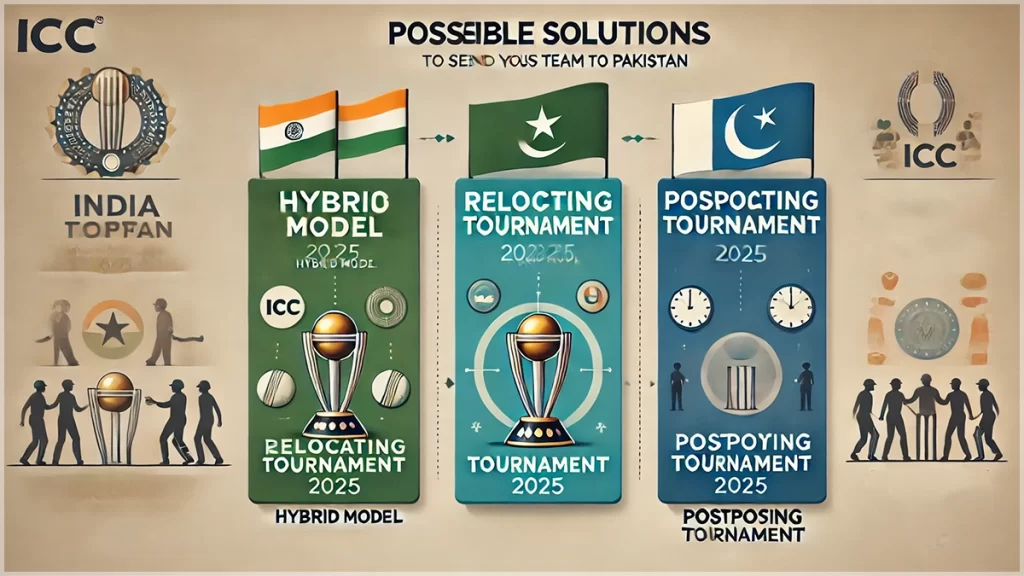
With India refusing to send its cricket team to Pakistan, the ICC is under pressure to find a resolution that respects both countries’ interests. Here are the options ICC might consider:
- Hybrid Model
The hybrid model, in which India’s games are played in a neutral location, could offer a middle ground. While this option would allow India to participate without compromising security, Pakistan is concerned that accepting a hybrid model may weaken its image as a safe host for international matches. - Relocating the Entire Tournament
Another option is to move the Champions Trophy to a neutral country, allowing all participating teams to play without security concerns. While this would ensure India’s participation, it would also be a loss for Pakistan, which has worked hard to re-establish itself as a safe destination for cricket. - Postponing the Tournament
Postponing the event could buy time to negotiate a resolution and give tensions a chance to ease. However, this would disrupt ICC’s international schedule, impacting other tournaments planned for the following years.
The Complex Relationship Between India and Pakistan in Cricket
India and Pakistan share a long-standing rivalry that goes beyond the cricket field. Political tensions between the two countries often impact their sports relations, making cricket a sensitive area.
- Impact of Political Events on Cricket Relations
Past events, such as the 2008 Mumbai attacks, have affected bilateral cricket ties between the two nations. Since then, India and Pakistan have only faced each other in ICC tournaments, with bilateral series remaining suspended. - Crowd Hostility During Matches
Matches between India and Pakistan have seen instances of crowd aggression, with Indian players facing hostility when playing in Pakistan. Such incidents have reinforced India’s concerns about the security of its players in Pakistani stadiums. - National Pride and Intense Fan Sentiment
Both nations have passionate fans, and the political backdrop heightens the significance of these cricket matches. In this climate, safety becomes a primary concern, and even minor incidents can escalate into serious security threats.
Pakistan’s Efforts to Ensure Safety for International Players
Pakistan has taken measures to address security concerns, aiming to assure visiting teams of their safety. After years of working to rebuild its reputation, Pakistan is keen to show that it can host international cricket events safely.
- High-Level Security for Players
Pakistan has implemented extensive security protocols, including military and police protection, to safeguard players. This high-level security arrangement has allowed teams like Australia and England to tour Pakistan recently, although India remains cautious. - Investment in Stadiums and Facilities
PCB has invested in modernizing its cricket infrastructure, upgrading stadiums and facilities to meet international standards. These improvements are part of Pakistan’s effort to revive international cricket in the country after years of isolation.
India’s Importance to ICC’s Financial Stability

India’s participation in ICC tournaments is critical to the organization’s financial health. The BCCI’s large fan base and sponsorship deals make India the primary contributor to ICC’s revenue.
- Broadcasting Rights and Sponsorships
India’s involvement in ICC tournaments attracts huge audiences, making broadcasting rights valuable to networks worldwide. If India does not participate, ICC stands to lose a significant portion of its viewership and sponsorship revenue. - Ticket Sales and Merchandising
Tournaments featuring India typically see higher ticket sales, both at the venue and through digital channels. ICC depends on India’s participation for strong ticket and merchandise sales, making India’s presence crucial to tournament success. - Economic Impact of India’s Participation
Without India, ICC’s financial stability could be compromised, as India generates a substantial portion of the revenue that funds ICC operations. This economic factor may influence how ICC addresses India’s decision to avoid the Champions Trophy in Pakistan.
Will ICC Find a Solution?
The question of ‘Why India boldly refused to send its cricket team to Pakistan for the 2025 Champions Trophy’ has sparked debate about the future of cricket diplomacy between the two nations. With Pakistan determined to host the Champions Trophy and India standing firm on its security concerns, ICC faces a challenging task in finding a middle ground.
The hybrid model offers a potential compromise, but Pakistan worries it could affect its image as a safe host for international events. Moving the tournament to a neutral location could ensure India’s participation but would feel like a loss for Pakistan. Postponing the tournament is another option, though it risks disrupting ICC’s global schedule.
As both countries await ICC’s decision, the broader implications for India-Pakistan cricket relations and international tournament hosting remain in focus. The ICC’s final stance will not only determine the future of the 2025 Champions Trophy but may also shape the policies and practices governing cricket diplomacy. For now, the cricket world watches closely, wondering how ICC will balance the complex political, economic, and safety concerns at play.
With ‘Why India boldly refused to send its cricket team to Pakistan’ capturing attention worldwide, fans hope for a resolution that protects players and respects both nations’ interests, preserving the spirit of international cricket.