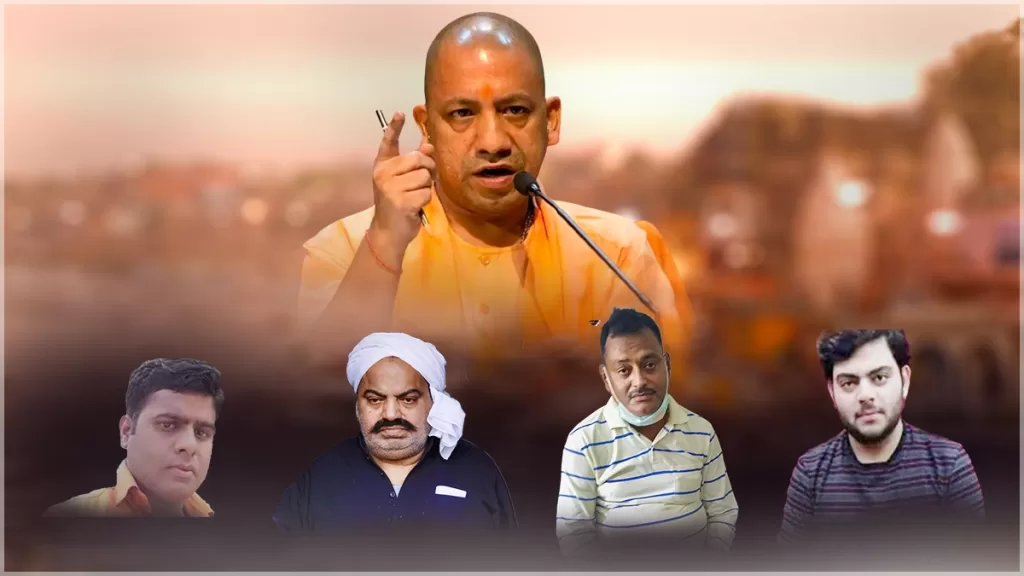
In Uttar Pradesh’s Bahraich, a tragic event unfolded as a young man named Ram Gopal Mishra lost his life during a religious clash. Following this incident, the UP police carried out a series of encounters, resulting in the death of several suspects. These actions have sparked debate, with some questioning the justification of these encounters, while others are praising the police for swiftly bringing justice. So, are these encounters necessary for maintaining law and order, or do they highlight a deeper failure in governance?
Table of Contents
What Happened in Bahraich?
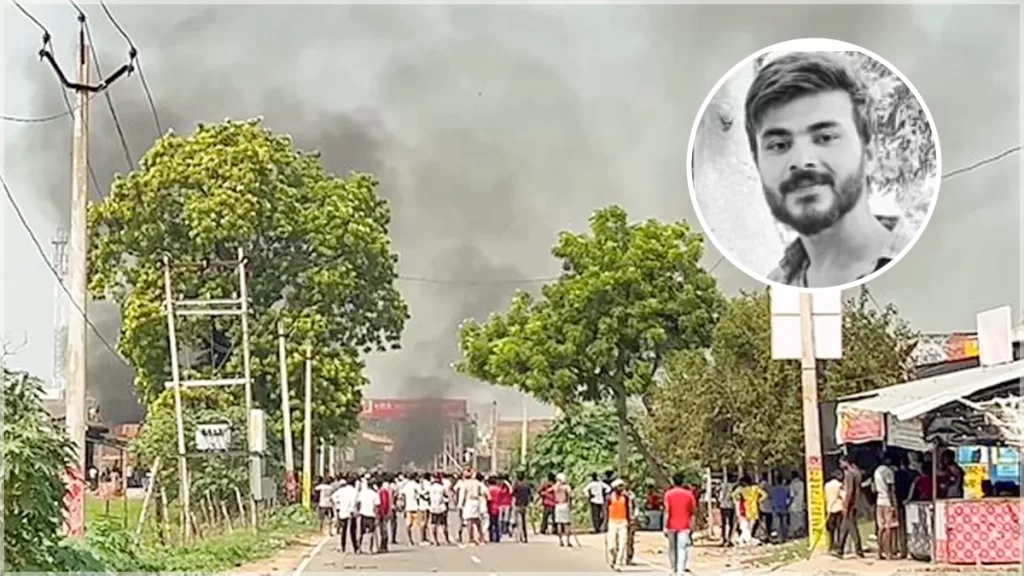
On October 13, 2023, tensions erupted during a Durga idol immersion procession in Maharajganj, Bahraich. The conflict began when a DJ playing music near a mosque led to a clash between the Hindu procession and the local Muslim community. Stones were thrown from a house, triggering a violent response from the procession. Amid the chaos, Ram Gopal Mishra climbed onto a rooftop and removed two green flags, replacing them with a saffron flag. In retaliation, Mishra was shot, pulled inside the house, and brutally killed.
The violence escalated, with angry mobs burning shops and vehicles during Mishra’s funeral procession. The Uttar Pradesh police quickly responded, leading to an encounter with the main accused, Rinku alias Sarfaraz, and another suspect, Mohammad Taleem, who were trying to flee to Nepal. Both were injured in the shootout and later died.
Reactions and Criticisms
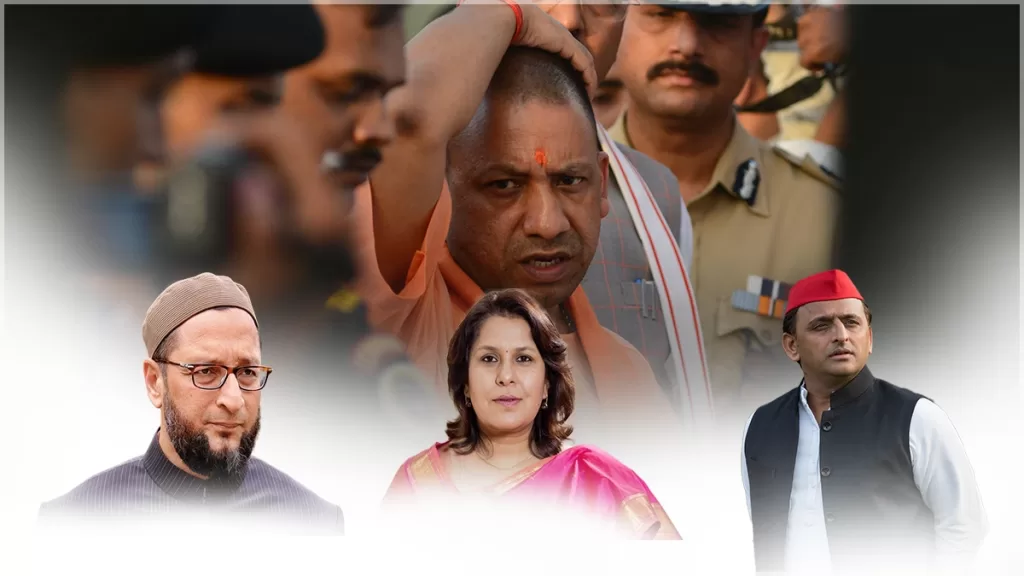
While many hailed the encounters as a necessary step in maintaining order, political leaders and activists expressed concerns. Akhilesh Yadav, leader of the Samajwadi Party, criticized the lack of police presence during the initial clash and questioned whether the encounters were truly justified. Congress leader Supriya Shrinate and Asaduddin Owaisi also voiced concerns, accusing the UP government of staging fake encounters to cover up its failures in governance.
Despite these criticisms, Chief Minister Yogi Adityanath has defended the police, maintaining that strict action is essential to control crime in the state. Since Adityanath took office in 2017, his government has followed a “zero-tolerance” policy toward criminals, which has led to over 10,000 police encounters and the deaths of 210 criminals.
The History of Encounters in Yogi’s Uttar Pradesh
Since 2017, Yogi Adityanath’s government has adopted an aggressive approach to law enforcement. The first major encounter under his rule was that of Mansoor Pahalwan, a notorious criminal, in Meerut. This set the tone for a series of encounters aimed at making Uttar Pradesh mafia-free.
One of the most notable cases was the encounter of Vikas Dubey in 2020, a gangster who killed eight police officers during a raid. Dubey was eventually arrested in Ujjain, but during his transport back to UP, he allegedly tried to escape and was shot dead by the police. Other high-profile encounters include those of criminals like Gauri Yadav, Pushpendra Yadav, and Asad Ahmed, the son of notorious gangster-turned-politician Ateeq Ahmed.
In the past six years, these encounters have not only eliminated many dangerous criminals but have also instilled a sense of fear among those involved in organized crime.
Is the Encounter Policy Working?
The question remains: has this encounter policy improved law and order in Uttar Pradesh? According to data from the National Crime Records Bureau (NCRB), there has been a significant reduction in crime under Yogi Adityanath’s administration:
- Crimes against women have decreased by 13%.
- Kidnapping cases have dropped by 35%.
- Sexual violence against women has reduced by 34%.
Additionally, crimes like riots, robbery, and dacoity have also seen substantial declines. These statistics suggest that the tough stance taken by the UP government has made the state safer, at least on the surface.
The Bigger Picture: Law and Order Before 2017
Before Yogi Adityanath became Chief Minister, Uttar Pradesh was notorious for its high crime rates. During the reign of previous governments, particularly under Akhilesh Yadav of the Samajwadi Party, the state witnessed several high-profile incidents of violence, including the Muzaffarnagar riots in 2013. These riots, which resulted in the deaths of many, were seen as a failure of the local administration to maintain peace.
Criminals like Ateeq Ahmed and Mukhtar Ansari wielded significant power in the state, with one foot in politics and the other in criminal activities. The lack of strict law enforcement allowed these individuals to thrive, creating an atmosphere of fear and lawlessness.
The Impact of Encounters on Uttar Pradesh’s Development
Yogi Adityanath’s government believes that restoring law and order is crucial to the state’s development. The 2017 UP Investors Summit saw ₹32 lakh crore worth of investment deals being signed, compared to just ₹4 lakh crore in 2018. This rise in investments can be linked to the improved security environment in the state. Business leaders, who previously feared the lawlessness of UP, now see the state as a safer and more promising place for investment.
The State Law and Order
While Yogi Adityanath’s encounter policy has led to a significant decrease in crime and boosted the state’s economic prospects, it remains a polarizing issue. Critics argue that encounters bypass the judicial system and question whether all are justified. On the other hand, supporters believe that these actions have brought peace and security to a state that was once known for its rampant crime.
Ultimately, the people of Uttar Pradesh will decide whether the encounter policy is a step in the right direction. What is clear, however, is that the state’s law and order situation has drastically changed under Yogi Adityanath’s rule.